

One of the things I hear most often from therapists in private practice is: “I’m just not getting enough enquiries.”
When I ask what they’re doing to attract clients, the answers are usually similar. They’ve joined a couple of directories, set up a website, post on Instagram when they remember, and told a few colleagues they’re taking on private clients.
And then they wait.
The problem usually isn’t that they’re doing the wrong things. It’s that there’s no strategy connecting any of them.
Being a good therapist isn’t enough
We’re trained to be therapists, not business owners. You can be an excellent clinician with years of experience and a lovely website, and still have a quiet diary.
People need to know you exist before they can work with you. They need to be able to find you, understand what you offer and feel confident enough to get in touch.
Without a plan, marketing becomes reactive. One week you decide you should post more on Instagram. The next, someone tells you Google Ads are the answer. Then you hear a colleague gets lots of referrals from a directory, so you sign up to that too.
Before long you’re doing a little of everything, without knowing what’s working. You might be spending hours on social media when most of your clients actually find you through Google, or paying for three directories when only one brings you enquiries.
Marketing doesn’t need to be complicated. But it does need to be intentional.
A full diary isn’t always a secure practice
There’s another reason to have a strategy, and it matters even when you’re busy.
Imagine 80% of your clients come from one insurer, employee assistance programme or referral company. That feels wonderful while the work is coming in.
But what happens if their arrangements change, their fees become unsustainable, or they simply stop sending you clients?
A busy practice can quickly become a vulnerable one. A sustainable private practice shouldn’t depend entirely on one source of work, whether you see five clients a week or twenty-five.
The goal isn’t just more clients
A strategy also helps you build the practice you actually want.
If you want to work three days a week, with a particular client group, at a fee that makes your business viable, your approach to finding clients needs to support that. There’s little point in lots of enquiries from people you’re not the right fit for.
The goal is the right clients, at the right fee, with a reasonably predictable flow of enquiries.
So instead of asking “What should I do to get more clients this week?”, it’s more useful to ask:
How do people currently find me?
Which sources bring me the right enquiries?
What can I realistically keep doing?
How will I know if it’s working?
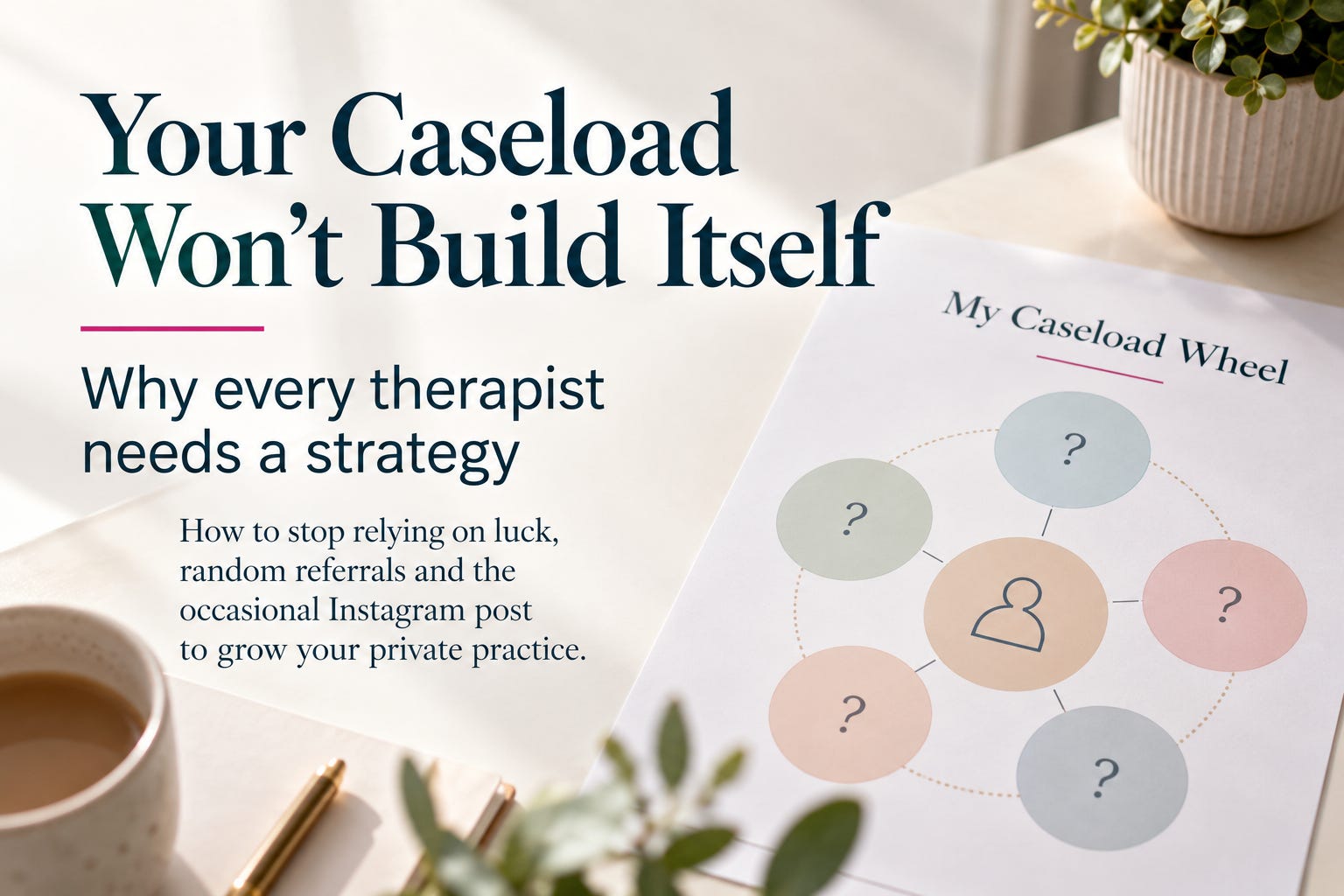
Below, I’m sharing the Caseload Wheel, the framework I use with therapists on my Getting Started in Private Practice course, as a downloadable worksheet. It maps the five ways clients find your practice and helps you choose where to focus over the next 90 days.